


Why Does My Yard Stay Wet After Rain?
If parts of your yard stay soggy long after the rain has stopped, it’s easy to assume you simply need better drainage.
Sometimes you do. But a wet yard can have several different causes, and installing a drain without understanding where the water is coming from may not solve the real problem.
The first step is to follow the water.

Why does water stay in some parts of a yard?
A yard becomes waterlogged when water arrives faster than it can soak into the soil, move through the ground or drain away.
That can be influenced by the type and condition of your soil, the shape of the land, water flowing in from surrounding areas, subsurface moisture, existing drainage or a combination of several factors.
Watching what happens during and after heavy rain can tell you a lot.
1. Start with the soil
Not all soils absorb and drain water at the same rate.
Clay-rich or heavily compacted soil can allow water to infiltrate slowly. Compaction from vehicles, construction activity or repeated foot traffic can also reduce the spaces within the soil that normally allow water to move through it.
You may notice water sitting on the surface even when the surrounding area appears relatively dry.
Before assuming you need underground drainage, consider whether the condition of the soil itself is contributing to the problem.
2. Look for low points
Water follows gravity.
Even a relatively small depression in a lawn or garden can become a collection point when water flows towards it from a larger surrounding area.
After rain, look at where puddles form and how long they remain.
If the same section of the yard becomes wet every time it rains, the shape and fall of the land may be part of the explanation.
The important question isn't only:
“Where is the water sitting?”
Also ask:
“Where did all this water come from?”
3. Follow surface runoff
The soggy section of your yard may be receiving much more water than the rain falling directly onto it.
Water can arrive from:
• Roofs and downpipes• Driveways and paved areas• Paths and patios• Sloping sections of the property• Retaining walls and landscaped areas• Higher neighbouring land
Hard surfaces are particularly important because they don't absorb rainfall in the same way that healthy soil and vegetation can.
A relatively small low area may therefore be receiving runoff from a much larger catchment.
4. Consider what might be happening underground
Not all water problems are visible on the surface.
Water can move laterally through soil, particularly on sloping sites or where different soil layers affect its natural movement.
You might see a persistently damp section partway down a slope, moisture appearing around a retaining wall, or an area that remains wet even when there is no obvious surface runoff flowing towards it.
This is why simply putting a drain where you see a puddle doesn't always address the underlying issue.
5. Check the existing drainage
If your property already has drainage, consider whether it is actually functioning as intended.
Look for obvious signs such as blocked surface drains, debris around grates, damaged outlets or water backing up during rain.
Also consider where the drainage eventually discharges.
A drainage system needs an appropriate outlet. Collecting water underground without somewhere suitable for it to go doesn't make the water disappear.
Existing underground drainage that is damaged, incorrectly installed or suspected of being blocked may require professional investigation rather than guesswork.
What should you look for the next time it rains?
One of the simplest ways to understand a wet yard is to observe it during rainfall, provided it is safe to do so.
Watch where water first appears, where it travels and where it begins to accumulate.
Then check the property again once the rain stops.
Areas that drain relatively quickly may be behaving normally after substantial rainfall. Areas that remain saturated considerably longer than the surrounding ground deserve a closer look.
Think about the whole journey:
Where does the water come from?
Where does it travel?
Where does it collect?
Where can it safely discharge?
That information is far more useful than looking at the puddle alone.
Does a wet yard always need a French drain?
No.
A French drain can be useful in the right situation, but it isn't a universal solution for every soggy lawn or wet garden.
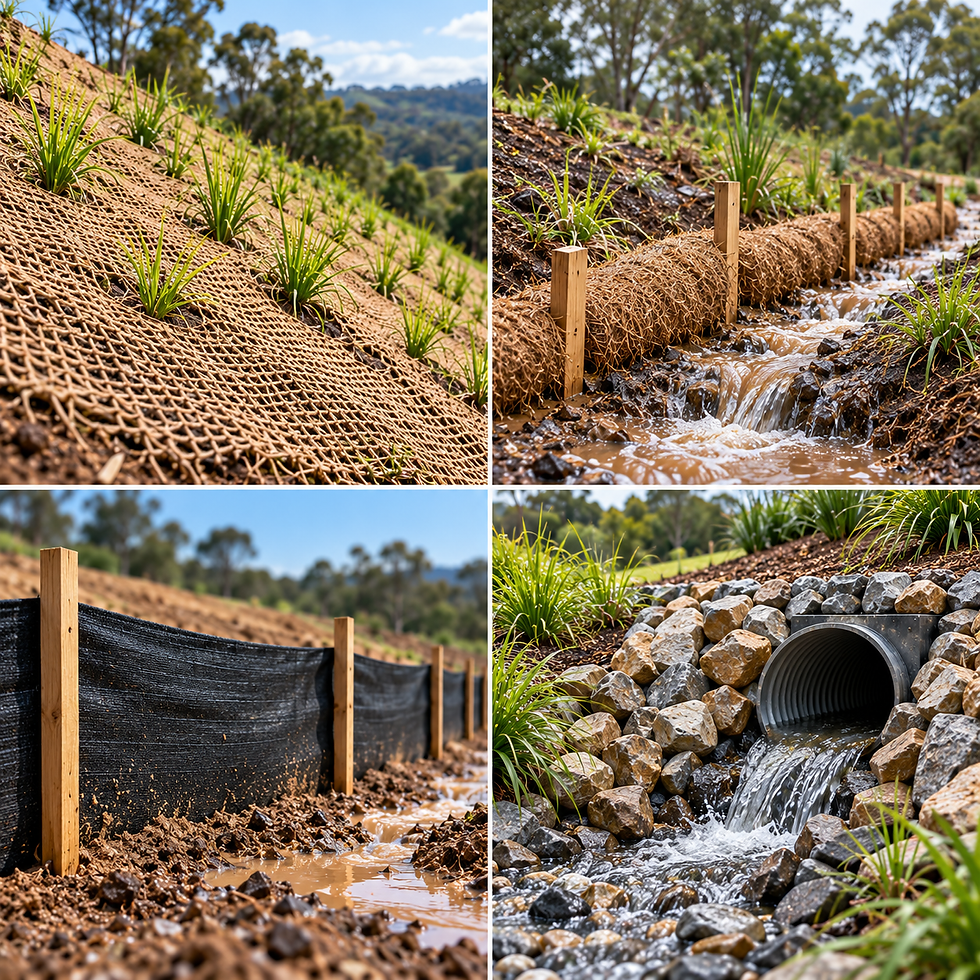
Depending on the cause, the appropriate approach might involve surface water management, correcting levels, improving or protecting soil, managing roof runoff, subsurface drainage, erosion control, repairing existing drainage or a combination of measures.
The solution should follow the problem, not the other way around.
Where do geotextiles fit into drainage?
Geotextile can play an important role in properly designed drainage systems.
Depending on the application, an appropriate geotextile can help provide filtration and separation between soil and drainage aggregate while allowing water to move through the system.
The important part is selecting the right material for the application and installing the drainage system correctly.
Geotextile isn't a substitute for understanding where the water is coming from or where it needs to go.
Think beyond the next sunny day
Good landscaping should work in wet weather as well as dry weather.
Managing water thoughtfully can help protect soil, reduce erosion, support healthier vegetation and create outdoor areas that remain more functional throughout the year.
Before digging trenches or buying drainage products, spend some time understanding your site.
Follow the water first.
Then choose the solution.
Need drainage and landscaping supplies?
BelloScapes Supply Co supplies geotextile and filtration products, drainage products, erosion and sediment control supplies and landscaping materials for tradies, landscapers and DIY projects.
You can also use our online Product Calculator to help work out quantities for selected products before ordering.
Collect in Bellingen, with local delivery available to the Coffs Harbour, Nambucca and Dorrigo areas.


Comments